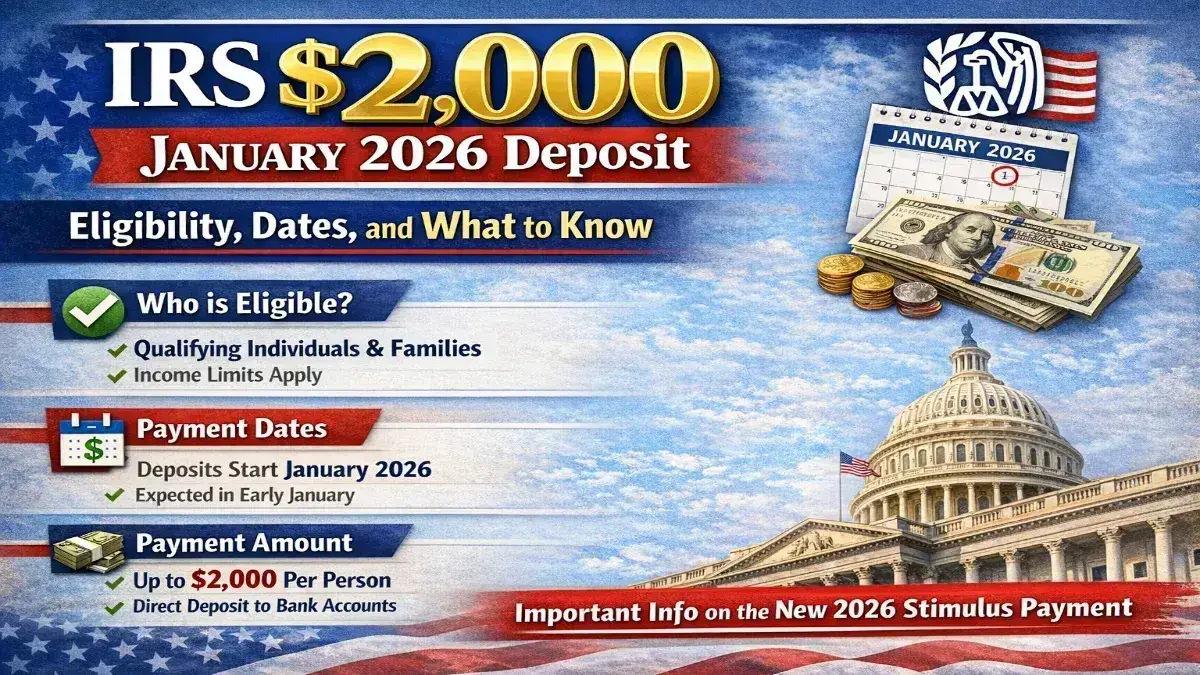
In recent weeks, online discussions about a possible $2,000 federal deposit in January 2026 have attracted widespread attention. Social media posts, forums, and forwarded messages have fueled curiosity, especially among households struggling with inflation, higher utility bills, and post-holiday expenses. While this has created excitement, it is important to understand what is confirmed and what remains speculation.
No Universal Payment Confirmed
As of now, there is no official announcement guaranteeing a universal $2,000 payment for all Americans. The discussion primarily reflects public hope for financial relief and concern about rising living costs. Seniors, Social Security recipients, SSI beneficiaries, and veterans are particularly attentive, as any additional support could help ease expenses in early 2026.
Understanding the $2,000 Figure
The widely discussed $2,000 amount is unlikely to be a new one-time stimulus check. Instead, it may represent adjustments or combined payments within existing federal programs. Social Security cost-of-living adjustments, SSI or SSDI changes, and other targeted relief for specific groups can sometimes add up to figures close to $2,000. These payments are usually meant to offset increased costs rather than provide long-term income.

Payment Distribution and Timing
Federal payments are rarely sent to everyone simultaneously. Distribution typically follows a phased schedule based on program type, income level, and eligibility. This means some recipients may receive funds early, while others wait weeks. Direct deposit is the fastest method, with funds appearing within a few days of release, while paper checks often take several weeks.
Eligibility Criteria
Eligibility depends on the underlying program. Social Security recipients, SSI beneficiaries, veterans, and low-income households are generally prioritized. Income limits, filing status, and enrollment in federal programs determine who qualifies. Accurate records with the IRS or Social Security Administration are essential to avoid delays or missed payments.
Preparation and Safety
To ensure smooth receipt of any payment, taxpayers should file taxes on time and keep bank and mailing details updated. Official government websites are the most reliable source for updates. Relying on social media or forwarded messages can lead to misinformation and scams, which often target people hoping for early access to funds.

Potential Benefits and Caution
If implemented, a $2,000 payment could provide short-term relief for households under financial strain, helping cover bills, utilities, or medical expenses. However, economists warn that one-time deposits are not long-term solutions and should be used for essential needs.
Disclaimer
This article is for informational purposes only and does not constitute financial, tax, or legal advice. As of now, no universal $2,000 federal deposit for January 2026 has been officially confirmed. Eligibility rules, payment amounts, and timelines may change. Readers should rely on official government sources or consult qualified professionals for guidance specific to their situation.